Plan B

Last week while waiting in line for former President Jimmy Carter for a book signing, I met Rachel, Eddie, and Aisha. They were in front of me in line at 7:15 a.m. on a sunny July morning. The three of them, all 12 years old, are students in the High Jump Chicago program, an enrichment program for Chicago public school students with academic potential but limited economic means. They attend all summer and on Saturdays during the school year, for two years. The three, along with assorted family members, got up very early in the morning to make it from their cozy beds to a sidewalk in front of the Seminary Co-op Bookstore in Chicago’s Hyde Park neighborhood. The Secret Service needed to see the press at 7:30 in the morning as part of their security check of the premises, conducted four-and-a-half-hours before Carter arrived.

The press included these three students, dressed in distinctive blue T-shirts from High Jump, who prepared questions to interview Carter. To develop their questions, they had researched Carter and his time at the White House. Rachel knew, for example, that Carter was the first president to have installed a solar panel on the White House. Aisha had a more personal and disarming question: she intended to ask Carter what world problems kept him awake at night.

This summer field trip almost unraveled when the students and their Issues and Ideas teacher, Jill, were informed that Carter did not plan to take any questions. There followed discussion, some wheedling and pressing, retrenching. Well, I offered, this is part of a journalist’s lot: things don’t always go as planned. Write about what happens, regardless. That’s plan B.

The students retreated to the store’s Plein Air Café, since there were hours to go before Carter arrived. A compromise emerged: they were first in line when Carter arrived very punctually for his noon signing. By then the line stretched out the bookstore door and south down Woodlawn Avenue.

As it turned out, Carter did respond to questions. The 90-year-old former president is working on another book; pessimistic about prospects for Middle East peace (remember he won the Nobel Peace Prize in 2002 for his peacemaking efforts through his Carter Center); and thinks of Donald Trump as a gift to Democrats. The three middle-schoolers were at the head of a line of about 600 people.
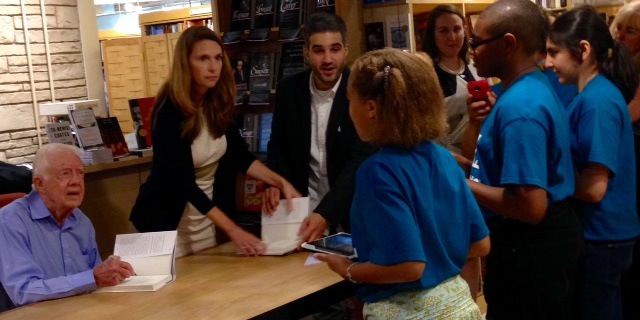
Image 2

This is my Plan B. I wrote it since my photo didn’t get used. But I also wrote it because it was an exhilarating day that reminded me of how much fun it is to listen to people’s stories, especially those people standing in line. Thanks, Rachel, Eddie, and Aisha. I hope you got a story too. My final advice: It pays to get up early sometimes.

Meditation: Lobstah Land

To my prairie-formed Midwestern eyes, Maine looks like nothing else I’ve seen: big water and hard granite. I come from the land of lake and limestone, where one watches for deer darting across the road, not massive moose that will best your car in a collision. The water around the island of Vinalhaven, where I am visiting, is dotted by colorful, bobbing buoys that mark the location of lobster traps. It’s lobster (or lobstah, as Mainahs call it) roll time and the season for summer people, down east and midcoast or wherever it is I am, not at home but visiting someone at her home.

My friend’s family is as native to Vinalhaven as its granite. Her great-grandfather polished the granite columns on the library; she points them out to me, and later shows me the farm her grandfather sold during the Depression. It’s now owned by summer people from Boston. Some people have been here a long time; her family name helps her fit in to the community of year-round residents, which is smaller by a few thousand than the summer population. Everybody wants to be in Maine in summertime, especially those who live the rest of the year in hot cities elsewhere.

Image

It’s not easy to get there; you need to know the ferry schedule. And the weather might mean the ferry won’t run, so you need to be ready with a plan B. Your car might not fit on the boat, which is OK because there’s no place you need to drive. The commercial strip is a few blocks long, and then it’s trees and rocks and houses sprinkled in outlying areas.

Besides granite, water, and lobsters, it’s all neighbors. My friend knows the vendors at the farmers market; one apologizes for not recognizing her. Stops to chat with people she knows are frequent. It’s a small place: small means everybody is up in your business, but pretty discreetly so. They give you your space. They’re Yankees: self-reliant and industrious, respecters of privacy, but there if you need ’em.

The Harbor Gawker restaurant, celebrating 40 years, is for sale. It’s called that because as it was originally sited, before the street was re-engineered, customers could sit and gawk at the harbor. The tablecloths are red and white checkered oilcloth. The menu is neatly printed on chalkboard after chalkboard after chalkboard, listing a dizzying variety of ways to serve fish and shellfish and, of course, lobster. It’s known for generous servings. My lobster roll is so stuffed with hunks of mayonnaised crustacean that I eat it with gusto and deliberation, so none of it ends up in my lap.

Place: what you see, what you hear, what you eat, how people live. Foreign or familiar, offering roots yet changing. Work, food, ancestors, neighbors, weather, the horizon of history and rock and big water. Millions of permutations of home.

Lament

Both Ta-Nehisi Coates and Jon Stewart have spoken my mind on the murders in Charleston. I feel heavily the charge that white people need to speak more forcefully against racism. One thing I can do is use my particular gift of writing; I’m also privileged to be in seminary these days, wrestling with understanding the Bible. I know for sure: the Bible speaks about violence, understands violence, portrays it. Who needs Game of Thrones to understand exquisite cruelty, anger, revenge? The seeds of violence are in the human heart and it is a most persistent weed; it is evil in the garden.

The sin of racism has allowed this weed to flourish for centuries. When violence arms itself with guns, wraps itself with flags, seduces the cowardly or weak-minded, the result is lethal. There is lament in Charleston and throughout the land.

Do what you can. Those of us who are privileged cannot afford despair. Read, march, weep, pray. There are many prayers of anger and lament in the Bible:

Don’t kill them,

or my people might forget;

instead, by your power

shake them up and bring them down,

you who are our shield and my Lord.

For the sin of their mouths,

the words that they speak,

let them be captured in their pride.

For the curses and lies they repeat,

finish them off in anger;

finish them off until they are gone!

Then let it be known

to the ends of the earth

that God rules over Jacob.

Ps. 59: 11-1

Flowers on the Graves

Let’s rename Memorial Day: Reflection Day.

Let’s think about war and its costs. What we as an (American) society regard as honorable is the willingness to give one’s life in service of a higher cause. Those who conscientiously object don’t object to the prospect of giving their lives, but they don’t agree with the means (killing) used to attain the goal. Suppose we broadly and nobly call the goal “maintaining freedom.” The U.S. started two wars in the Middle East without having been attacked by those countries it invaded and called it maintaining freedom. Post-World War II, the U.S. has conflated “maintaining freedom” (Korea, Vietnam, Gulf.1 and Gulf.2, plus other police actions) with its aggressive military action in and against smaller countries. We stepped in to all these places. No wonder America looks like the Great Imperial Satan. We butt in a lot militarily. Russia did this recently with Ukraine and was economically sanctioned. But the U.S. is too big to sanction. From outside our frame of reference, this makes no sense.

Let’s think about war and its costs. Here in the U.S. we have veterans, usually coming from a certain socioeconomic class. We pay for war; we pay for those who have fought it after they are done fighting it as well as during the fighting. We pay and pay for our “wounded warriors” whom sophisticated medicine saves. The Congressional Budget Office notes that spending on veterans’ disability benefits tripled between 2000 and 2013.[1] We pay “opportunity costs”: things we don’t get because we have spent dollars on defense. So the size of our defense budget, which in 2014 exceeded $610 billion, also exceeded the defense spending of the next seven nations combined[2] (China, Russia, Saudi Arabia, France, UK, India, Germany), which spent $601 billion. As I drive to Indiana, I see interstate roads crumbling as public monies go to provide for a bloated common defense. Our investment in railroad infrastructure lags well behind that of Japan and France (I think I remember reading China’s as well but cannot find the reference.) From outside our frame of reference, this makes no sense.

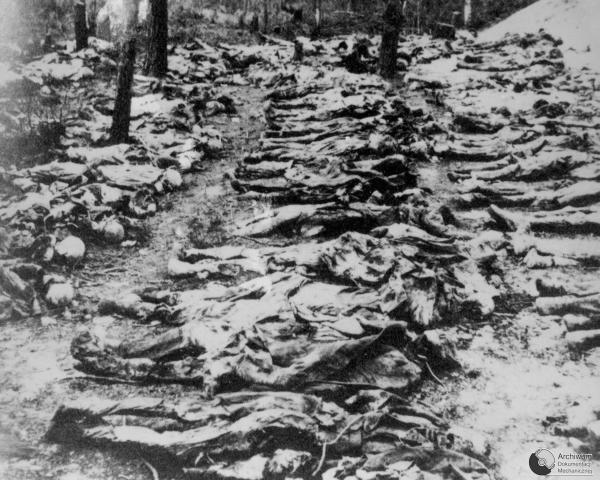
Let’s think about war and its costs. The human costs are incalculable. Let’s just keep it to World War II: 60 million military and civilian dead, equaling 3 percent of the world’s population in 1939. Random freakish facts[3]: the number of Polish dead – remember that the war began when Germany invaded Poland – exceeded the number of German military dead.

Katyn massacre, 1940, exhumation, 1943

Katyn massacre, 1940; exhumation, 1943

Depending on which estimates you accept, by some measures half the casualties of war were in the then-Soviet Union. One-third of Japan’s casualties were civilians. UK casualties were only slightly larger than those of the United States, and the UK was involved for two additional years. The greatest numerical losses were sustained by the Soviet Union and China. This is not a blur of numbers. 60 million dead is 60 million grieving mothers, unless of course the mothers were among the casualties. From any frame of reference, this makes no sense.

[1] http://www.cbo.gov/topics/veterans-issues

[2] http://pgpf.org/Chart-Archive/0053_defense-comparison

[3] Wikipedia is good for something: http://en.wikipedia.org/wiki/World_War_II_casualties

No Fixing

“No fixing, saving, advising, or correcting each other.”

A Circle of Trust “Touchstone” at Parker Palmer’s Center for Courage and Renewal

I am always tempted. Tempted to fix, save, advise. Someone says something to me and I wonder: what is that person really saying underneath what she is saying? Is that person saying: I need you to fix this? Probably not. So why should advice come out? And yet it does.

Someone in my meeting sent me some queries with an open-ended request: what do you think? Well, it depends. My usual reaction is to think the situation depends on me: I have to fix/save/advise. What would happen if those responses were unnecessary? If I were only being asked to listen because someone needed to be heard?

On the surface listening would seem to be easier. Yet it can require holding back, not responding unless requested. In practice listening is harder than it appears. It’s not for the lazy or what the Buddhists might term “unskillful, ” a term meant to suggest that one needs to practice a skill, and practice makes one more better at it.

We who are Quakers get regular practice in listening. In our Meetings for Worship, we listen expectantly. We expect to hear something from the Spirit. That listening is hard. Spirit is invited, but cannot be dragged in. Making an effort is less successful than stopping effort and only noticing. The body is still but the mind is very active, thinking about fixing/saving/advising: Now that committee meeting didn’t go well. I should have said…

Listening is hard because we live in a noisy world and the insides of our heads reflect that. Sitting in silence we eliminate some noise, but not all. Sitting in silence means not eating mental junk food, reaching for a Flamin’ Hot bag of habits and distractions.

There are of course times when people need to be saved. But these should be obvious. An earthquake in Nepal has killed thousands of people. Those who were trapped needed to be saved. Nepal will need fixing for years to come. We who want to help need to be advised on how best to do so.

But when life offers not dreaded emergencies but blessed opportunities to connect with others and grow, are we listening expectantly? Or are our own ideas getting in the way, like false gods?

What if saying nothing were a gift to be given? Go ahead: I’m all ears. Oprah Winfrey, one of my favorite spiritual teachers, said pretty regularly: people just want to be heard. The Spirit, too, wants to be heard. Very occasionally, the Spirit shouts if you’ve really missed the message. But usually the Spirit speaks, or listens, through others or in a sudden tiny epiphany: a thank you or good job or isn’t that beautiful. Isn’t that beautiful doesn’t need correcting.

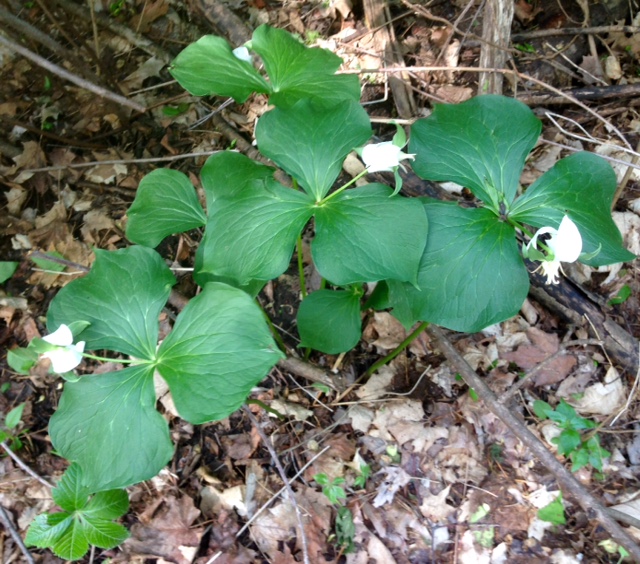
noddingtrillium

Listen for the epiphany. It’s on the other side of the anxiety, beyond the fixing and saving.

Queries: What do you hear when you listen?

Is there more than one kind of listening?

(Nodding trillium, depicted, lives in Hidden Lake Forest Preserve, which does need fixing.)

Thank You Prayer for Spring

Thank you for all the plants pushing new life out, green newborn nubs.

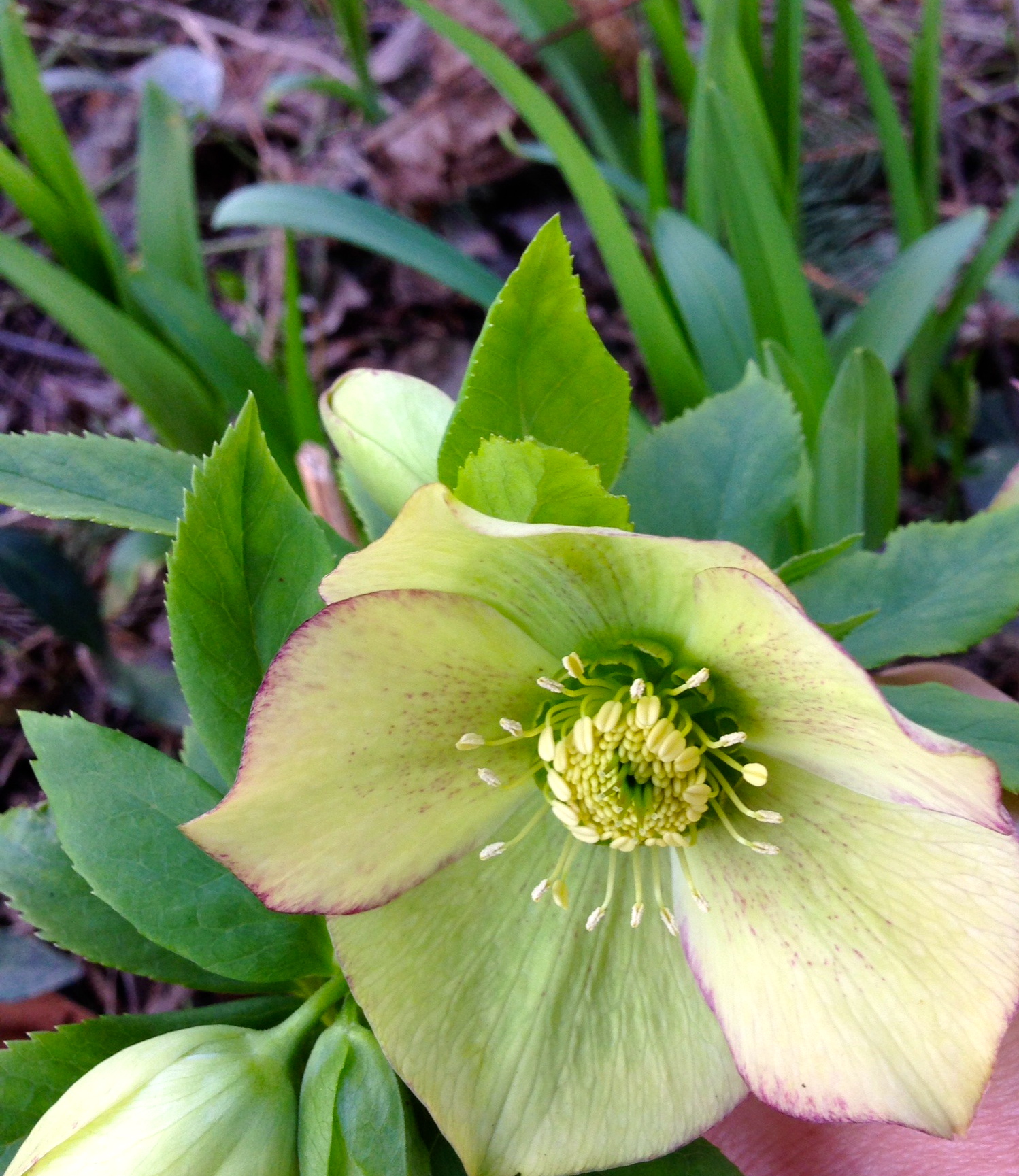
Image 2Thank you for the green grass of scilla, topped by delicate blue stars.

Thank you for the sunny yellow trumpets of daffodils.

Thank you for the fat buds of saucer magnolia, ready for their cue to open.

Thank you for the nodding white umbrellas of snowdrops.

Thank you for the heady perfume of hyacinths.

Thank you for the spiky yellow plumes of forsythia.

Thank you for the sweet song of the cardinal, birdie birdie whistled at treetop.

Thank you for the orange-breasted robins hopping hungrily on lawns.

Thank you for the brightening gold of goldfinches, swooping through the yard.

Thank you for the rabbits at dusk, munching the short new grass.

Thank you for the discreetly lengthening daylight, the temperature inching toward warmth, the surge of plant life tuning up for its return.

The Still Days

After the service of Holy Thursday, lights dim to shadowMichelangelo_Merisi_da_Caravaggio_-_The_Entombment_-_WGA04148, and sound ceases: no organ, no bells, no singing. We mark the three-day passion, death, and entombment of Jesus in silence. In earlier times, these were known as the Still Days. No sound until Easter morning, when we, like Mary, will discover that Jesus has risen from the dead.

Yet until we learn that, time is interminable and still. The three days that mark the nadir of the liturgical year for all Christians are days of betrayal, agony, suffering, death. How could that be? Jesus’ followers must have wondered at the terrible turn of events: a close aide betrays him, his frightened friends scatter and hide. The man whose words drew crowds is tortured and crucified, bearing a painful and humiliating punishment that brazenly trumpets the mightiness of the Powers That Be over the lowly people to whom Jesus gave bread and hope.

We reflect on this on the still days, in the quiet. We are alone; where is the Lord? They have seized him, they have murdered him. Stillness is the frame for tears, anxiety, fears, despair. The minutes of the still days stretch on. The sun will not set; sleep will not come.

As a follower in mourning, what would I have done? Walked, I think, down dirt paths and byways, trying to hide, in order to be alone and weep, trying to somehow run fast enough to run back into the past, before the horror happened and the world was not rent, like the curtain in the temple. On the still days, sorrow muffles any feeble words that might offer consolation but utterly fail.

We wait in the still days for the time to pass, the air to move. We wait for nothing, hearts broken, numbed, dazed, cried out.

What next? No answer. Only stillness.

Resurrecting That Old House

Jesus answered them, “Destroy this temple, and in three days I will raise it up.” John 2:19

That old house has finally sold. It’s been empty for a while, and what used to be a grand old place on West Main Street now looks more ramshackle than rambling. It’s a big red brick place, a relic of Richmond, Indiana’s, 19th century economic glory and also a street side memento of the family that once lived there and likely hosted grand gatherings. The house looks like it’s easily suffered years of neglect. I’d like to interrogate it: why are you empty? What were you like before?

The whole place takes up an acre in the city, along a busy thoroughfare. Most of it is a yard so overgrown with woods and weeds it resembles the forbidden forests of fairy tales. One year I saw plenty of poison ivy. This year I have seen a collective of cats. I’m guessing the Enchanted Forest hosts a feral colony that can live there discreetly and safely. I’ve even heard the cats live in the house, which wouldn’t surprise me; it would certainly have enough bedrooms to accommodate an extended feline family. There are still curtains on the house’s front window, a leftover touch of elegance, an intimation that light and hospitality once were there and can come again.

It will take work for that old house to be resurrected. These past two weeks at seminary while studying the subjects of poverty and justice I’ve seen photos of Resurrection City , the tent city erected on the National Mall in Washington, D.C., in 1968 by the Poor People’s Campaign begun by Martin Luther King Jr. It is both a good idea and a rough place there at the intersection of hope and faith, a fixer-upper in a less well-heeled neighborhood of the Kingdom of Heaven.

In the pictures I’ve seen, Resurrection City looked pretty depressing, a shanty town. If it had beauty, I guess you had to know where to look for it or know how, through a very active imagination. Dr. King certainly knew; his mind’s eye opened by God, he told us he had seen the Promised Land. In the speech he delivered in Memphis the night before he was assassinated and months before his campaign marched on Washington, he saw something very few others could see. ,Beyond the Memphis sanitation workers strike, beyond the snarling dogs and fire hoses and jail cells of the civil rights movement, he could see the kingdom, because, like Moses, he had been to the mountaintop. The rest of us lack imagination or are hustling along in our lives. Some are angry; others lack faith.

I wonder where the flowers were in Resurrection City. Cities need little details to make them livable and pleasing: cats padding around at twilight, flowers that bloom welcome, kids playing. Did those city planners want only to tell the truth? Truth is not always beautiful; sometimes it’s simply the medicine you need when you’re sick, bringing healing and tasting bitter. If Resurrection City was a failure, perhaps it was because they didn’t plant flowers. They certainly planted seeds. How long, oh Lord, till those seeds flower?

Thank You Note, late winter

Thank you for juicy bright oranges on winter-gray February mornings.

Thank you for the chimes ringing in the stiff wind that blows a little good.

Thank you for seed catalogs that burst with the promise of later bloom.

Thank you for stopping the snow before it got too heavy to shovel.

Thank you for cats that lounge in the afternoon sun, relaxed.

Thank you for the citrus-scented steam hovering over the teacup.

Thank you for the light in darkness, warmth in cold, simple in complicated, silence in tumult,

Every blessed day.

Amen.

These Shoes Are Made

The Buddha was asked, “What do you and your disciples practice?” and he replied, “We sit, we walk, we eat.” The questioner continued, “But sir, everyone sits, walks, and eats.” The Buddha told him, “When we sit, we know we are sitting. When we walk, we know we are walking. When we eat, we know we are eating.”

–Thich Nhat Hanh*

I think about shoes a fair amount. I don’t collect them like Imelda Marcos, the Philippine dictator’s wife, did. I don’t have room nor do I really follow this year’s shoes or clothes or handbags. But in my calculus, shoes are a little different than the average consumer possession. My shoes have to fit me well and comfortably (my feet are narrow), they can’t be made by teenagers in Asia who don’t make very much money for their work, and I prefer nonleather because I’m a vegetarian. I will also confess to some vague fashionista sensibility, albeit Quakerly; I avoid sensible shoes that proclaim just how dowdy and eco-friendly they are.

I always look around carefully when I need a new pair, and have over time become flexible. It’s hard to find nonleather shoes that meet the other two criteria, despite diligent hunting. I recently took an ethics course at the seminary I attend, which has turned out to be very useful for everyday life. Through it I learned how to analyze what good things were at issue (all three of these criteria) and what my choices were (leather or cloth, more or less affordable), weigh all that, and then choose.

I took the course at a graduate school away from my home, and for my trip I brought along three pairs of shoes: boots (the day I left the snow and cold were so awful they closed the interstate); flats (pretty, practical, and made of expensive leather); walking shoes.

The walking shoes belonged to my late older sister, Barbara. When we sorted through the clothes she left (and she didn’t have many pairs of shoes either), I had a clear memory of these on her feet as she came to my house for a holiday dinner. The shoes made me imagine her being alive and able to walk into my house again. So I took a few pairs of shoes and shirts to keep her close to me in a sense and to walk a mile in her shoes. Literally. They were free, they were made of cloth and quite gently used, and they were comfortable. Perfect. I snagged them, cried the first time I put them on, replaced the flimsy black laces with neon pink ones, and wore them.

They’ve held up well, and I’ve walked miles in her shoes through several seasons, a few different cities, and a couple seminary courses. Most recently I wore them while studying in Puerto Rico. I figured they would be good hiking shoes for El Yunque National Forest, lighter to pack, and an irrational yet convenient way of bringing her along to share the adventure. El Yunque is the only tropical rain forest in the US forest system. It rains a lot (an average of 120 inches a year), and so the ground is usually wet, and mucky-muddy at its wettest. I liked the feeling of nimbleness the shoes gave me on sometimes slick paths. But they weren’t the best choice to negotiate off-path diversions – let me see, what is THAT flower? – unless I was willing to risk treading in the mire.

Lured by exotic blooms, I eventually succumbed to temptation and plunged in to the mud to inspect the flora more closely. The shoes may be ruined, I reasoned, but why not sacrifice them to the gods of El Yunque, one of whom is Yuracan, the god of hurricanes. At journey’s end, the mud clung stubbornly to my shoes, and I decided to bring them home to see if they could be saved by diligent cleaning. To my surprise, they cleaned up well, and now await new destinations.

Have I baptized them in mud and made them mine? At what point do memories fade or mutate? Do these shoes remind me of my sister? The mud and flowers of a tropical rain forest? Or are they just shoes, with neither memory nor meaning attached?

I have done walking meditation in the style of the Buddhist monk Thich Nhat Hanh around my neighborhood and at a Buddhist retreat. You wouldn’t think it could possibly be challenging to put one foot in front of the other, step after step, something people have a lifetime’s experience of doing. But walking with conscious awareness is different and can be difficult.

Breathing in, I breathe in memories;

Breathing out, I let go.

Breathing in, my sister walks with me;

Breathing out, she is with the communion of saints.

Breathing in, I can remember the blooms of a rain forest;

Breathing out, I see the sidewalk beneath my feet.

Breathing in, I walk to a destination;

Breathing out, I walk with God.

*Source: The Long Road Turns to Joy: A Guide to Walking Meditation by Thich Nhat Hanh. (Berkeley: Parallax Press, 1996